When parents search for kids BJJ in Murrieta, they're usually asking three questions at once: Is it safe? Will my child actually like it? And will it teach them something real? Fair questions — BJJ asks a lot of a kid: close contact, a resisting partner, and techniques with names like "armbar." This guide answers what parents ask us at the door of 10th Planet Jiu Jitsu Murrieta before their child's first class.
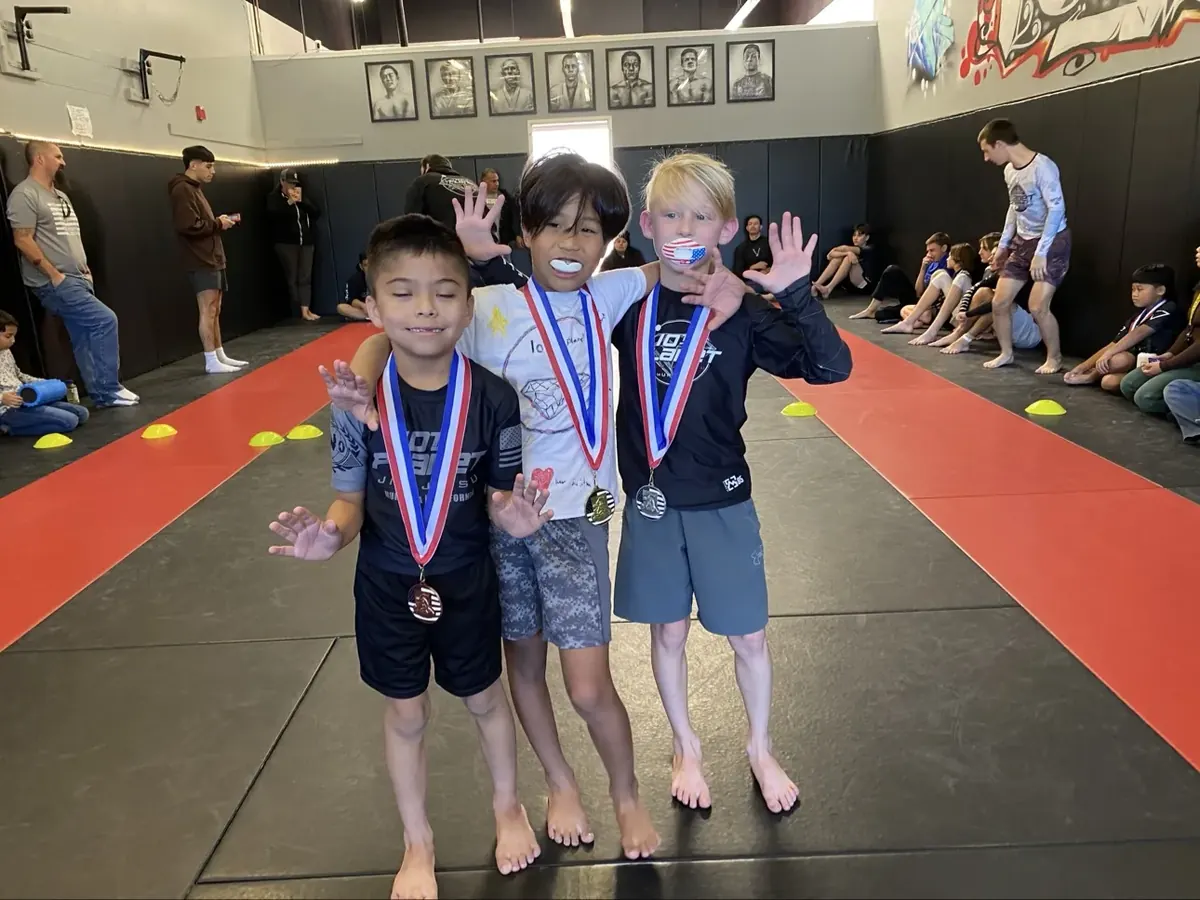
What Kids BJJ Actually Is
BJJ — Brazilian jiu jitsu — is a grappling art built on leverage and position instead of size and strength, which is exactly why it works so well for children. At 10th Planet, kids train the no-gi version: no heavy uniform, no belt-tying ceremonies, just movement, control, and problem-solving on the mats. Our youth program runs from toddlers (ages 2–4) through the teen years, with classes grouped by age and size so a five-year-old is never drilling with a twelve-year-old. The BJJ in Murrieta page maps out how the kids and adults programs fit together.
Safety Is the Structure, Not a Slogan
Parents should ask hard questions about safety, so here are straight answers about how kids BJJ classes here are built. Classes are coach-led from warm-up to dismissal — kids are never turned loose to wrestle unsupervised. Techniques are taught in stages: solo movement, then cooperative drilling with a partner, then controlled games that use the skill. Submissions are introduced age-appropriately, and the tap — the signal that stops everything instantly — is taught on day one and treated as law. A child who taps is praised, not teased, and every partner learns that letting go the instant someone taps is the most important skill in the room.
Just as important: partners are matched by coaches, not by kids picking each other. Size, experience, and temperament all go into who drills with whom.
What a First Kids BJJ Class Looks Like
A typical first class is more structured — and more fun — than most parents expect. It opens with movement warm-ups that double as games: animal walks, rolls, and agility drills that teach kids how to fall safely and move on the ground. Then comes the technique of the day, shown in small pieces and practiced with a partner. Classes close with a game or controlled drill that uses the day's skill, and a short line-up where coaches reinforce one idea — a position, a rule, or a habit like listening the first time.
Your child will not be sparring full-speed on day one, and nobody will be "testing" them. First classes are about comfort: the room, the coaches, the other kids, the rhythm of class.
What Kids Actually Learn in the First Month
The visible skills come first: how to fall without getting hurt, the major positions, a real escape or two, and the beginnings of guard — the position that defines BJJ. But parents usually report the invisible skills first. A child who has drilled listening, lining up, waiting for instruction, and working with a partner for a month starts showing it at home and at school: more focus, more patience, more confidence in their own body. Kids BJJ also gives children who don't love team sports a place to progress at their own speed — there's no bench in jiu jitsu, and nobody sits out.
For many families in Murrieta, Temecula, and Menifee, the junior jiu jitsu program becomes the activity that finally sticks — because every class is different, every week has a visible win, and belts and stripes mark progress kids can point to.
The Programs, Age by Age
Kids aren't small adults, and a 4-year-old shouldn't train like a 14-year-old. That's why the kids program is split by age, with each group built around what kids that age can actually do — and what they actually need.
Toddlers (starting at age 2) are all movement and listening: short, play-based classes where kids learn to fall safely, follow a coach's voice, wait for a turn, and burn serious energy. There's no sparring and no pressure — the win at this age is a child who loves walking through the door.
Littles (ages 5–8) add real technique on top of the games: the major positions, how to escape from the bottom, and their first controlled drilling with a partner. Classes stay structured and coach-led, with the energy pointed somewhere useful — this is the age where focus and following multi-step instruction visibly grow.
Juniors (ages 9–12) is where BJJ starts to look like BJJ: full technique, guard work, submissions taught with control, and live rounds scaled by size and experience. It's also where the social side blooms — training partners become real friends, and the belt system starts to mean something to them.
Teens (ages 13–16) train in their own program, at a pace and intensity that respects where they are — too old for kids' games, not yet adults. The technique is the full no-gi system, and teens who stick with it graduate toward the adult program as they mature. For teenagers, the confidence piece is rarely subtle: posture changes, eye contact changes.
Kids also move between groups on development, not just birthdays. A mature 8-year-old on the edge of Juniors, or a smaller 9-year-old who needs another season with the Littles, gets placed where they'll learn best — the coaches watch that constantly, and they'll talk it through with you as your child grows.
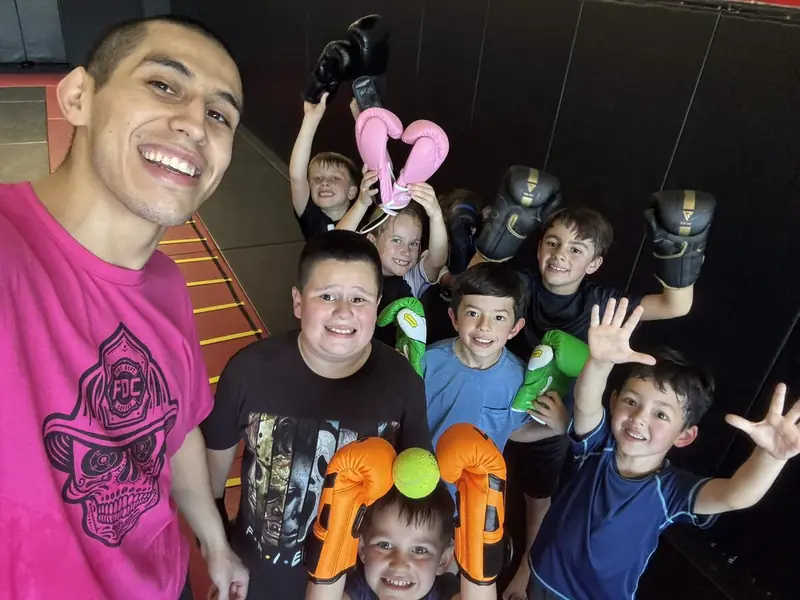
Belts and Stripes: How Your Child's Progress Gets Marked
Kids love a marker they can see, and BJJ gives them one: a belt system built for children, with stripes between belts as smaller steps. A stripe isn't a participation trophy and it isn't handed out on a schedule — coaches award them for showing up, improving, and carrying themselves the right way on the mat. That's why kids point at them with pride. They know the difference.
Parents sometimes ask how long each belt takes. The honest answer is that it varies by child — attendance, age, and development all count, and rushing a child to a belt they're not ready for helps no one. What you can count on is visibility: you'll watch classes, see the skills build week to week, and know exactly what a promotion was earned for when it comes.
You'll also notice what stripes do at home. Kids who earn things slowly, in public, with effort, start expecting that pattern everywhere — homework, chores, other sports. We don't promise that transfer, but parents mention it often enough that it's part of why families stay.
Stripes also give parents a window. When a coach puts a stripe on your child's belt, ask them what it was for — they'll usually tell you, in detail, and that conversation is worth as much as the stripe. It teaches kids to connect effort to recognition in their own words, and it shows you exactly what the coaches are watching for: not just technique, but attitude, effort, and how a child treats their partners.
Your Job From the Chair: How Parents Help Most
The most helpful thing a parent can do sounds too simple: bring them consistently. Kids don't improve in bursts; they improve in attendance streaks. The child who comes twice a week on ordinary weeks will outgrow the talented child who comes in waves. Guard the schedule the way you'd guard a school commitment — because the compounding is the same kind.
During class, let the coaches coach. It's tempting to call out corrections from the chair, but kids split their attention, and the coach's voice is the one they need to learn to follow. Save your energy for after class, where it counts double: ask what they learned, let them show you the move of the day on the living-room floor, and praise effort and bravery louder than results.
And when your child has a hard class — they all do — resist the urge to fix it by quitting. A tough round, a stripe that went to a friend, a week where nothing clicks: these are the moments the sport is actually for. Kids who learn to come back after a hard day are learning the skill that transfers to everything else.
Finally, model the standard. Kids watch what training means to you — whether it's a chore on the calendar or something the family respects. The families who treat class like school, not like a drop-in activity, are the ones whose kids are still training — and thriving — a year later.
What age can my child start BJJ?
Our youngest program starts at age 2. Toddlers train in short, play-based classes built around movement and listening; older kids move into the Littles and Juniors groups as they grow, with teens training in their own program.
Does my child need a gi?
No. We're a no-gi academy, so kids train in a rash guard and shorts or athletic wear — no uniform to buy before you know they love it.
Is BJJ safe for kids who are shy or have never done sports?
Yes — and shy kids are often the ones who gain the most. Classes are structured, partners are assigned by coaches, and nobody is thrown into live sparring before they're ready. Confidence in BJJ is built in small, repeatable wins.
Can I watch my child's class?
Of course. Parents are welcome to watch, and for a first class we encourage it — you'll see the structure, the coaching, and the room for yourself.
How much does kids BJJ cost?
Programs vary by age group, and the team will walk you through options honestly and without pressure. Your child's first class is free, so you can see exactly what you're paying for before you pay anything.
What should my child bring to their first class?
Just a water bottle and clothes they can move in — a rash guard or fitted shirt and shorts without zippers or pockets. No uniform to buy, no special gear. We'll handle everything else, including making sure they know where to line up and what happens next.
What if my child is nervous, or wants to quit after a few weeks?
Nerves before class one are normal — most kids are fine within ten minutes of the warm-up starting. A dip a few weeks in is common too, usually right when the newness wears off and the real learning starts. Give it a fair run of consistent classes, talk to the coaches about what you're seeing, and judge it after a month, not after one hard day.
If you're comparing kids BJJ in Murrieta, the fastest way to judge any academy is to watch one class. Ours is at 26305 Jefferson Ave, Suite M, Murrieta, CA 92562, with families joining from across Southwest Riverside County. Book your child's free first class and come see the room.