Type "bjj temecula" into Google as an adult who's never trained, and the same worries show up for almost everyone: Am I in good enough shape? Will I be the worst person there? Will I get hurt, or look lost? From Temecula, one more question joins the list: is it worth driving for? Honestly: everyone training at BJJ near Temecula at 10th Planet Murrieta started with exactly those worries — and the drive turned out to be the smallest part of starting. Month one answers the rest. This is how it actually goes, week by week.
Before Week 1: The Drive, and What You're Walking Into
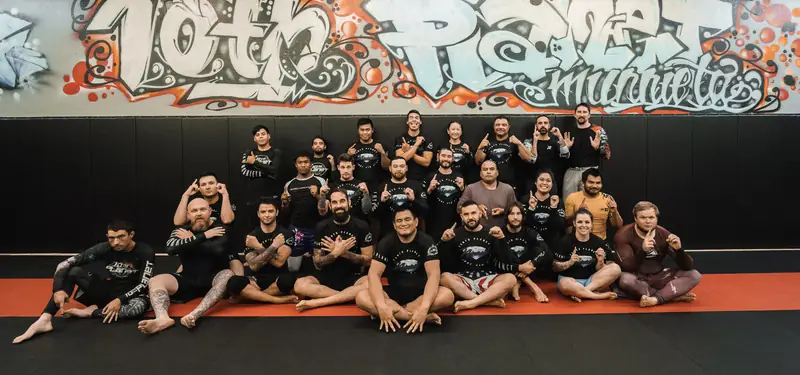
We're about 10–15 minutes north of most Temecula neighborhoods on I-15 — roughly 10 minutes from Old Town, 15–20 from wine country — at 26305 Jefferson Ave in Murrieta. What that short drive buys you is a dedicated 10th Planet academy: no-gi BJJ, trained in a rash guard and shorts instead of the traditional gi jacket. No uniform to buy before you start, no grips on clothing; the game is built on underhooks, overhooks, and body control. You don't need experience or a background in sports. You need a water bottle and the willingness to be a beginner. Our overview of adults jiu jitsu covers the program structure; here's the experience itself.
Week 1: Learn the Map
Your first week is about vocabulary — not from a book, but positions your body starts to recognize. You'll learn what the guard is, what mount and side control feel like from the top and the bottom, and why everyone keeps saying "frames" and "shrimp." Classes are drilling-first: a coach shows a technique, you practice it with a partner at cooperative speed, and the details get layered in.
Two things matter more than any technique this week. First, tapping: the tap is how you say "you've got it, let's reset," and tapping early and often is a skill, not a surrender. Second, breathing. New students hold their breath and muscle everything; by week's end you'll feel the difference when you don't.
Week 2: Escapes Before Attacks
Beginner BJJ at 10th Planet is defense-first, on purpose. Week two is built around getting out of bad spots — escaping mount, escaping side control, recovering your guard when someone passes it. That order surprises people, but it's why our beginners don't panic: when you know you can get out, you're willing to try things.
You'll also notice techniques connect: the escape you drilled Tuesday shows up inside Thursday's sweep. BJJ is a system, and week two is when its edges come into view.
Week 3: Your Guard Starts Working
The guard — fighting from your back with your legs between you and your partner — is the heart of Brazilian jiu jitsu, and week three is when most beginners get their first real reps building one. You'll work closed guard control, a sweep or two, and the beginnings of the 10th Planet system: lockdown, rubber guard pathways, and the transitions that make this academy's BJJ different from anywhere else in the valley — the part a general martial arts school can't offer, and exactly why the drive up I-15 exists.
This is also when the soreness changes character. The "I didn't know that muscle existed" phase fades, your timing sharpens, and drills start feeling like a language instead of noise you're copying.
Week 4: Rolling — A Little, On Purpose
Live sparring in BJJ is called rolling, and beginners don't get thrown into it on day one. By week four, with escapes and a guard to work from, short positional rounds get introduced — start in a position, play it, reset. Your first real rolls will be humbling and weirdly fun in equal measure. You'll get submitted. Everyone does. You'll also catch yourself doing a week-two escape without thinking, and that's the moment BJJ clicks from "classes I'm taking" into "a thing I'm learning."
What Progress Honestly Looks Like After One Month
Not a highlight reel. After a month, a typical beginner from Temecula can name the major positions, escape the two worst ones with real technique, hold a guard that takes effort to pass, and survive rounds instead of just enduring them. Submissions come when they come — chasing them in month one is how people stall. The students who last measure progress in comfort, not taps. Instruction is led by Professor Drew, a 10th Planet black belt under Eddie Bravo, and the standard is the same whether you drove ten minutes or forty.
Making a Short Drive a Steady Habit
From most of Temecula, we're a short drive up I-15 — about 10 minutes from Old Town, 15–20 from wine country. That's close enough that the drive isn't the hard part. The hard part, for every beginner everywhere, is the first month of building the habit. Here's what actually works for our Temecula students.
Anchor training to something already in your week. Class on the way home from work, or on the same mornings you already head north — a session that piggybacks on an existing trip stops feeling like a special event and becomes part of the route. Keep your gear bag packed and in the car. The fewer decisions between you and the mat, the more often you get there.
And give the drive a job. A lot of students use it to switch gears — music up, workday off — and the drive home to replay what they learned. Ten minutes of thinking about the technique you just drilled genuinely helps it stick. Plenty of people drive further for coffee. This drive comes with a skill at the end of it.
One more practical trick: train on the days that are hardest to talk yourself out of. If Monday-you always finds an excuse, Monday is exactly the class that builds the habit. The students who last aren't the ones with the most free time — they're the ones whose training days survive bad weeks.
Temecula life runs on school calendars, sports seasons, and weekend plans — training has to fit inside a real week, not an ideal one. That's another reason the short drive matters: a class you can reach in 15 minutes on a busy Wednesday survives contact with real life. The goal for month one isn't a perfect record. It's a standing appointment you keep more often than you miss, close enough to home that "too far" never gets a vote.
What Changes in Months Two and Three
Month one is survival and vocabulary. Months two and three are where the game starts to assemble. Your escapes get earlier — you stop waiting until you're fully flattened to move. Your guard stops being a place you endure and becomes a place you attack from: a sweep you're known for, a submission you actually hunt. You'll start chaining, too — one technique failing straight into the next, instead of resetting and hoping.
Your rolling changes as well. Positional rounds stretch into fuller rounds, and you'll roll with a wider range of partners, including upper belts who'll let you work and then show you exactly where you were exposed. Getting caught by someone better stops stinging and starts teaching — every tap is information about a hole in your game, delivered kindly or otherwise.
Fitness changes sneak up on you. Warm-ups that wrecked you in week one become your warm-up in the truest sense. Grip strength, hip movement, breathing under pressure — the adaptations are specific to grappling, and they compound quietly, class after class.
This is also when most beginners pick their first real goal. For some it's a stripe. For others it's entering a local tournament, or simply surviving a full round with the training partner who used to tap them at will. Any of those is a good goal. Specific beats impressive, every time.
You Won't Be the Only Beginner in the Room
A quiet fear keeps a lot of adults out of BJJ for years: walking into a room where everyone already knows what they're doing. Here's the reality of a fundamentals room — it refills constantly. New students start every month, and everyone on the mat was the newest person once, including the coaches. Being new isn't a status here; it's a season, and it passes faster than you think.
Training with people ahead of you is a feature, not a bug. An experienced student drilling beside you will adjust your grip without being asked. A fellow beginner gives you rounds at your own speed. Between the two, you learn what the technique looks like — and what it feels like while you're still building it.
You'll also learn names fast. BJJ is social in a way a treadmill never is — you can't drill an escape without a partner, and partners become familiar faces within a few weeks. For a lot of Temecula adults, that community is the surprise benefit: the training brings them in, the people keep them coming.
Do I need to get in shape before starting BJJ?
No — BJJ is how you get in shape. Classes scale to the fitness you bring through the door, and drilling lets you work hard without being destroyed. Waiting to be fit first is the most common reason people never start.
What should I wear to my first class?
A rash guard or fitted athletic shirt and shorts without pockets or zippers is perfect for no-gi BJJ. Our beginner gear guide covers everything in detail — but for class one, workout clothes you already own are fine.
Will I have to spar on my first day?
No. Your first classes are technique and drilling. Live rounds come once you have the escapes and control to make them productive — usually a few weeks in, always at your coach's direction.
How much does BJJ cost?
Memberships vary by program, and the team will walk you through options in person with no pressure. Your first class is free, so the real first step costs nothing: come feel a class, then decide.
What if I can only train twice a week?
Then train twice a week. Two steady sessions beat an ambitious schedule that collapses by week three. Most beginners who stick with BJJ long-term started at two classes a week — the habit matters more than the volume, and volume tends to follow once the habit is yours.
Can my kids train here too?
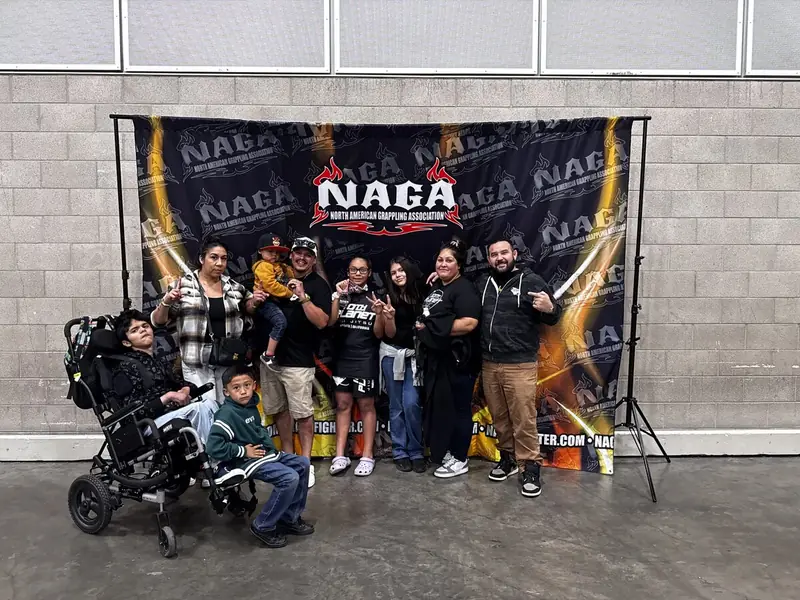
Yes — kids train in their own age-group programs, from Toddlers starting at age 2 through Littles (5–8), Juniors (9–12), and Teens (13–16). Plenty of Temecula families train with us across both the kids and adult programs. Your child's first class is free, same as yours.
If you're in Temecula or anywhere in Southwest Riverside County and you've been searching for BJJ near you, month one is smaller than you think — four weeks of showing up. 10th Planet Jiu Jitsu Murrieta is at 26305 Jefferson Ave, Suite M, Murrieta, CA 92562, about 10 minutes north on I-15. Take your free first class, and let week one start.