When parents search for kids BJJ near Temecula, they're usually asking three questions at once: Is it safe? Will my child actually like it? And will it teach them something real? Fair questions — BJJ asks a lot of a kid: close contact, a resisting partner, and techniques with names like "armbar." Temecula parents add a fourth question: is it worth the drive north? This guide answers what parents ask us at the door of 10th Planet Jiu Jitsu Murrieta before their child's first class — including why so many families from Temecula decide that it is.
What Kids BJJ Actually Is
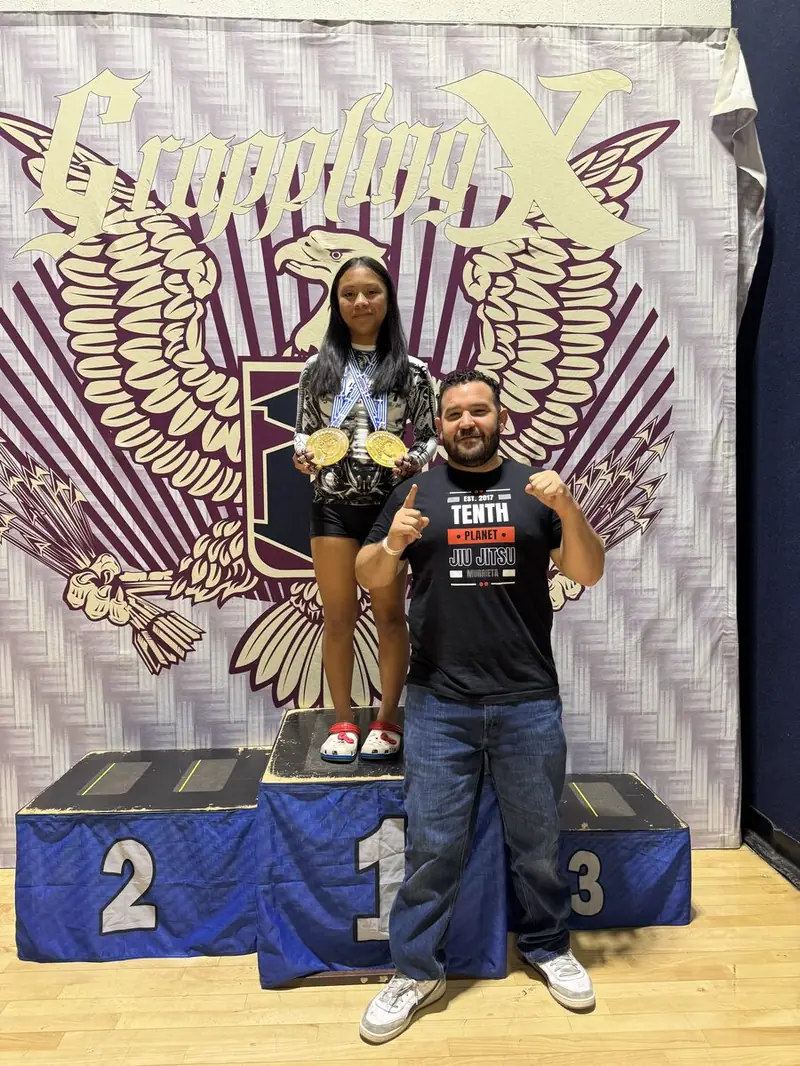
BJJ — Brazilian jiu jitsu — is a grappling art built on leverage and position instead of size and strength, which is exactly why it works so well for children. At 10th Planet, kids train the no-gi version: no heavy uniform, no belt-tying ceremonies, just movement, control, and problem-solving on the mats. Our youth program runs from Toddlers (ages 2–4) through the teen years — Littles (5–8), Juniors (9–12), and Teens (13–16) — with classes grouped by age and size so a five-year-old is never drilling with a twelve-year-old. Our page for families coming from Temecula explains the drive and how the kids and adults programs fit together.
Safety Is the Structure, Not a Slogan
Parents should ask hard questions about safety, so here are straight answers about how kids BJJ classes here are built. Classes are coach-led from warm-up to dismissal, under head instructor Professor Drew, a 10th Planet black belt under Eddie Bravo — kids are never turned loose to wrestle unsupervised. Techniques are taught in stages: solo movement, then cooperative drilling with a partner, then controlled games that use the skill. Submissions are introduced age-appropriately, and the tap — the signal that stops everything instantly — is taught on day one and treated as law. A child who taps is praised, not teased, and every partner learns that letting go the instant someone taps is the most important skill in the room.
Just as important: partners are matched by coaches, not by kids picking each other. Size, experience, and temperament all go into who drills with whom.
What a First Kids BJJ Class Looks Like
A typical first class is more structured — and more fun — than most parents expect. It opens with movement warm-ups that double as games: animal walks, rolls, and agility drills that teach kids how to fall safely and move on the ground. Then comes the technique of the day, shown in small pieces and practiced with a partner. Classes close with a game or controlled drill that uses the day's skill, and a short line-up where coaches reinforce one idea — a position, a rule, or a habit like listening the first time.
Your child will not be sparring full-speed on day one, and nobody will be "testing" them. First classes are about comfort: the room, the coaches, the other kids, the rhythm of class.
What Kids Actually Learn in the First Month
The visible skills come first: how to fall without getting hurt, the major positions, a real escape or two, and the beginnings of guard — the position that defines BJJ. But parents usually report the invisible skills first. A child who has drilled listening, lining up, waiting for instruction, and working with a partner for a month starts showing it at home and at school: more focus, more patience, more confidence in their own body. Kids BJJ also gives children who don't love team sports a place to progress at their own speed — there's no bench in jiu jitsu, and nobody sits out.
For many families in Temecula, Murrieta, and Menifee, the junior jiu jitsu program becomes the activity that finally sticks — because every class is different, every week has a visible win, and belts and stripes mark progress kids can point to.
Why Temecula Families Choose a Dedicated No-Gi Academy
Temecula has martial arts options, and plenty of them are fine. What it doesn't have is a dedicated 10th Planet academy — a school built entirely around no-gi jiu jitsu, in the system Eddie Bravo created, taught by coaches who train in it themselves. That's what the short drive north on I-15 buys: not just a kids class, but a specialty.
Specialty matters more for kids than most parents expect. A child in a dedicated grappling program spends every class on the skills that make BJJ work — position, leverage, escapes, control — instead of splitting time across forms, weapons, and striking curricula. And because the academy teaches the same system to toddlers and adults alike, your child is on a path with no dead end: the technique they learn at seven is the same game, deepened, at seventeen.
There's a second advantage parents don't always expect: because the whole academy trains the same system, older kids become visible proof for younger ones. Your 7-year-old will watch the Juniors and Teens train and see exactly where the path leads. Schools that mix a little of everything rarely give a child that picture — a room full of older kids who started right where yours is standing.
Confidence, Bullying, and What Changes at Home
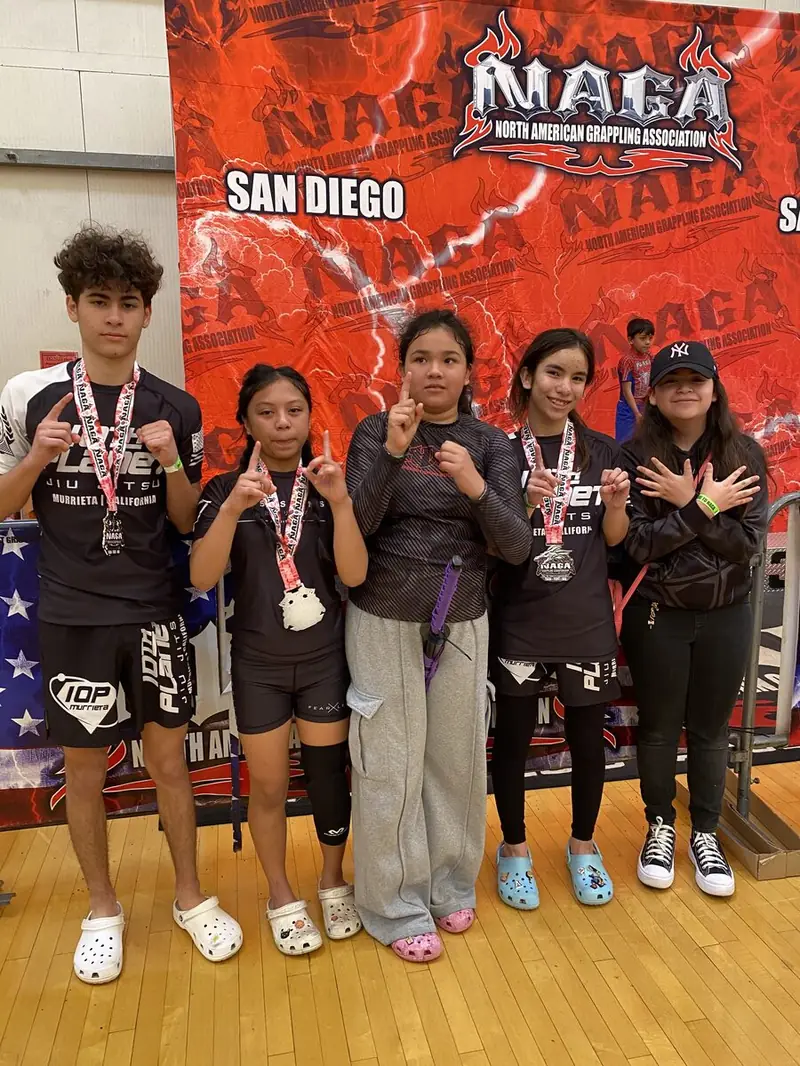
Ask parents why they started looking at BJJ and one word surfaces again and again: bullying — or the fear of it. The honest promise of this sport is not that your child will win a fight. It's that a child who trains stops carrying themselves like a target. They've been in close contact, they've been held down and escaped, they've solved problems against resistance. That changes how a kid walks into a room.
The confidence isn't loud. Parents describe it as posture: shoulders back, voice steady, eye contact held. A child who knows they can handle a bigger kid's weight in class is harder to rattle with words in a hallway. And because BJJ gives kids a physical outlet with real structure — warm-up, technique, rounds, done — a lot of the restlessness that gets kids in trouble at school finds somewhere better to go.
None of this is magic, and it isn't instant. It builds the way strength builds: small deposits, made weekly, over months. But it is real, and it tends to show up at home and school before it shows up in any match — in how a child handles a hard day, a hard classmate, a hard moment.
One Academy for the Whole Family
Because the programs run from age 2 through adults, families don't age out of us. A toddler starts in a play-based class; five years later she's a Junior working real guard passing, while her older brother trains with the Teens and her dad is in the adult program. Siblings each train in their own age group, with their own coaches and their own wins to report at dinner. It also means your kids grow up inside one community instead of restarting at a new school every few years.
Practically, it simplifies family life: one academy, one culture, one set of coaches who know your kids by name. If you have children in different age groups, talk to the team when you book — they'll help you find class times that keep the week sane.
What to Look for When You Visit Any Academy
Before you enroll anywhere — including here — watch a full class. Not the highlight reel, not the tour: a regular weekday class. Look at who has the coach's attention (everyone, in turns), how corrections are given (specific and calm beats loud), and whether the kids drilling look focused or feral. A good kids room is controlled energy, and you can feel the difference in five minutes.
Ask how partners are chosen, what happens when a child is overwhelmed, and how progress is marked. Straight questions deserve straight answers — you've seen ours throughout this page. Then trust what your child reports after their first class. Kids don't fake enthusiasm: if they ask when they get to go back, you have your answer.
One last thing to check: how the class ends. Are kids dismissed in an orderly way? Do they leave tired and smiling? Do parents get a word from the coach when something went well — or when something needs work? The end of class tells you how an academy communicates, and communication is half of what you're choosing when you choose a school for your child.
What age can my child start BJJ?
Our youngest program, Toddlers, starts at age 2. Toddlers train in short, play-based classes built around movement and listening; as kids grow they move into Littles (5–8) and Juniors (9–12), with Teens (13–16) training in their own program.
Does my child need a gi?
No. We're a no-gi academy, so kids train in a rash guard and shorts or athletic wear — no uniform to buy before you know they love it.
Is BJJ safe for kids who are shy or have never done sports?
Yes — and shy kids are often the ones who gain the most. Classes are structured, partners are assigned by coaches, and nobody is thrown into live sparring before they're ready. Confidence in BJJ is built in small, repeatable wins.
Can I watch my child's class?
Of course. Parents are welcome to watch, and for a first class we encourage it — you'll see the structure, the coaching, and the room for yourself.
How much does kids BJJ cost?
Programs vary by age group, and the team will walk you through options honestly and without pressure. Your child's first class is free, so you can see exactly what you're paying for before you pay anything.
Can both of my kids join, even at different ages?
Yes — that's the norm here, not the exception. Each child trains in their own age group — Toddlers from age 2, Littles (5–8), Juniors (9–12), Teens (13–16) — and each gets their own free first class. Tell the team your kids' ages when you book and they'll line up the right classes.
How is no-gi different from the BJJ classes my friend's kids take?
Most traditional BJJ is trained in the gi — the heavy jacket and pants — and a lot of the technique is built on gripping that clothing. No-gi trains in a rash guard and shorts, using body control instead of cloth grips. It's the same art, adapted to how people actually dress and move — and it's the only way we teach, for kids and adults.
If you're comparing kids BJJ near Temecula, the fastest way to judge any academy is to watch one class. Ours is at 26305 Jefferson Ave, Suite M, Murrieta, CA 92562 — about 10 minutes north on I-15 — with families joining from across Southwest Riverside County. Book your child's free first class and come see the room.