As a parent, watching your child come home upset because of a bully is one of the hardest things to sit with. It's natural to start looking for something — anything — that might help. Jiu jitsu comes up often in these searches, and for good reason. Here's an honest look at why, and what to actually expect.

It's Not About Teaching Kids to Fight
This is the biggest misconception parents have walking in the door. A well-run kids jiu jitsu program isn't about teaching children to be aggressive or to "fight back" in the way people imagine. It's about teaching control — control of their own body, control of a situation, and the calm confidence that comes from knowing they could defend themselves if they truly needed to. Most kids who train jiu jitsu actually become less likely to get into physical altercations, not more, because the anxiety and insecurity that often escalate conflict starts to fade.
Confidence Built Through Competence
Confidence that's just talked about doesn't stick. Confidence that's earned through real skill does. When a child spends months learning how to escape a bad position, defend themselves on the ground, and slowly improve week over week, that competence becomes part of how they see themselves — not just on the mats, but in the classroom and on the playground too.
Structure and Discipline
Jiu jitsu academies that run real youth programs (not just glorified daycare) teach structure: bowing in, listening to instruction, waiting your turn, showing respect to training partners and coaches. For kids who struggle socially, this structure can be genuinely grounding. It also gives them a clear, repeatable framework for handling frustration — something that translates directly to handling a difficult classmate.
What to Look For in a Kids Program
- Coaches who are specifically experienced working with children, not just adults
- Age-appropriate class structure (a 6-year-old and a 13-year-old should not be in the same class)
- An emphasis on discipline, respect, and control — not aggression
- A trial option so your child can experience it before committing
A Real Anti-Bullying Tool
Many academies, including ours, build anti-bullying conversations directly into youth curriculum — discussing how to walk away, when it's appropriate to set a physical boundary, and how to communicate confidently with both peers and adults. The physical skills matter, but the mindset shift is often what parents notice first.
Why Bullies Pick Targets — and How Training Changes the Equation
Bullies don't pick the strongest kid. They pick the kid who looks like an easy target: head down, shoulders in, avoids eye contact. Jiu jitsu rewires all of that from the inside out. Kids who train walk differently, make eye contact, and carry a quiet assurance that's almost impossible to fake — because it was earned on the mats, one hard round at a time.
Parents in Murrieta, Temecula, and Menifee report the same pattern: within months of starting, the bullying situations fade — not because their child fought anyone, but because they stopped looking like someone worth testing. And on the rare occasion a situation does escalate, trained kids have the composure and skill to handle it without panic.
What to Tell Your Child About Their First Class
If your child is nervous about starting — especially a child who's been bullied — frame it right: 'This is a place where you'll learn to be strong, and nobody will ever make fun of you for trying.' Our coaches in Murrieta specialize in making anxious beginners feel safe from minute one. The first class is free, the environment is supportive by design, and your child will leave standing a little taller than when they walked in.
Schools across Lake Elsinore, Wildomar, and Canyon Lake are full of our students. Ask around — you'll find parents who've watched this exact transformation happen.
When to Start: Don't Wait for 'Rock Bottom'
Many parents wait until bullying becomes severe before looking for solutions. You don't have to. The best time to start jiu jitsu is before there's a crisis — when your child is simply shy, or anxious, or going through a wobbly phase. Prevention builds on a calm foundation; repair has to dig out of a hole first.
That said, it's never too late either. We've worked with kids in Murrieta who arrived withdrawn and guarded, and watched them bloom over months of consistent training. The mats meet every child where they are. There's no tryout, no bench, no popularity contest — just a structured environment where effort is rewarded and every child belongs.
If your child is being bullied right now, also loop in their school — jiu jitsu complements the school's response, it doesn't replace it. And then bring them to a free trial class. Watching your child discover their own strength is something no parent forgets.
Free Trial: The Zero-Risk First Step
Bringing a bullied child to a martial arts trial can feel like a big step — for the parent as much as the kid. So let's make it small: one free trial, no commitment, no sales pitch. You'll watch from the sidelines while our coaches make your child feel safe, capable, and included from the first minute. Most parents tell us they knew within twenty minutes.
We're at 26305 Jefferson Ave, Suite M, Murrieta, CA 92562, and families join us from Temecula, Menifee, Wildomar, Lake Elsinore, and Canyon Lake. Reach out through our contact form or call +1 (951) 708-6644 — tell us your child's age and what they're dealing with, and we'll handle the rest with care.
What to Say to the School — and What Training Changes There
Training doesn't replace the adults whose job is keeping your child safe. Keep doing the parent work: document what's happening, put concerns to the school in writing, and ask specifically what their plan is. Where training changes the school equation is in your child. Kids who train walk into those meetings — and into the hallway — differently. Teachers notice a child who makes eye contact, speaks clearly about what happened, and isn't radiating fear. Those small signals change how seriously and how quickly situations get handled.
Training also widens your child's world beyond the school social map. A kid whose whole identity is being targeted in one building gains a second building where they're known, valued, and getting visibly better at something hard. For many families that's the turning point: not a fight won, but a life that got bigger than the problem.
The First Month: What Parents Usually Notice
Week one is mostly novelty — the uniform-free gear, the games inside the warmup, a coach who already knows their name. By week three or four, subtler things start showing up at home: shoulders a little straighter, a little more willingness to answer questions about their day, sometimes the first casual mention of a friend from class. Sleep often improves before confidence visibly does; tired kids regulate better.
What you generally won't see in month one is a finished transformation, and any program promising one is selling. What you will see is trajectory — a child accumulating small proofs that they can do hard things, in a room that notices. For a kid who's been made to feel small, trajectory is everything.
Girls, Relational Bullying, and Why Training Helps There Too
Bullying of girls often looks different from the hallway-push version: exclusion, rumor campaigns, the group chat that goes quiet when she joins. Parents sometimes wonder what a physical art has to offer a social problem. The answer is that the core injury is the same — a child being taught, daily, that she doesn't get to decide her own standing. Training directly contradicts that lesson. On the mat her standing is decided by her work, visibly and fairly, in a peer group that operates by different rules than the schoolyard hierarchy.
There's also a physical reality worth naming plainly: girls who train learn that their bodies are strong, capable instruments — not decorations to be judged. That shift in body image, arriving in the exact years it's most under attack, is something parents of our girl students mention constantly. Confidence that starts in the body doesn't stay there.
Knowing the Line: When It's More Than Bullying
One honest boundary, parent to parent: most bullying is a school-climate problem that time, adults, and confidence can solve. Some situations are past that — threats, physical harm, extortion, anything sexual, anything involving a group targeting one child relentlessly. Those go beyond a school counselor's inbox: document everything, escalate in writing, and involve authorities when safety is at stake. Training your child is part of a protective strategy; it is never a reason to leave them in a situation adults should be ending.
If you're unsure which side of the line your child's situation sits on, say it out loud to us at the academy. Coaches hear these stories every year, and a second adult's clear read — early — is worth more than a perfect read late.
Quick Answers
Will learning jiu jitsu make my child more aggressive?
The opposite. Trained kids are calmer and more controlled because they don't operate from fear. Our coaches emphasize discipline and de-escalation — fighting is always the last resort.
What if my child is being bullied right now?
Start jiu jitsu and loop in the school simultaneously — training complements the school's response. Many parents see their child's demeanor shift within the first couple of months.
At what age can kids start?
Our Toddlers program starts at 2–4 (with a parent), Littles at 5–8, Juniors at 9–12, and Teens at 13–16. Anti-bullying benefits compound the earlier they begin.
What if my child is much smaller than the other kids?
That's common, and coaches manage it directly — partners are matched by size and experience, especially for younger students, and coaches watch pairings the way lifeguards watch a pool. Jiu jitsu itself was built for the smaller person; the techniques your child learns are leverage-based precisely because size differences are the assumed problem.
Does my child have to compete?
No. Competition is always optional in our kids programs, and many students never enter a tournament — they get the full benefit of training, confidence, and fitness from classes alone. For kids who do want to test themselves, coaches will help you pick a first event when they're ready. The choice belongs to your family, and "never" is a perfectly good answer.
Try a Free Trial With Your Child
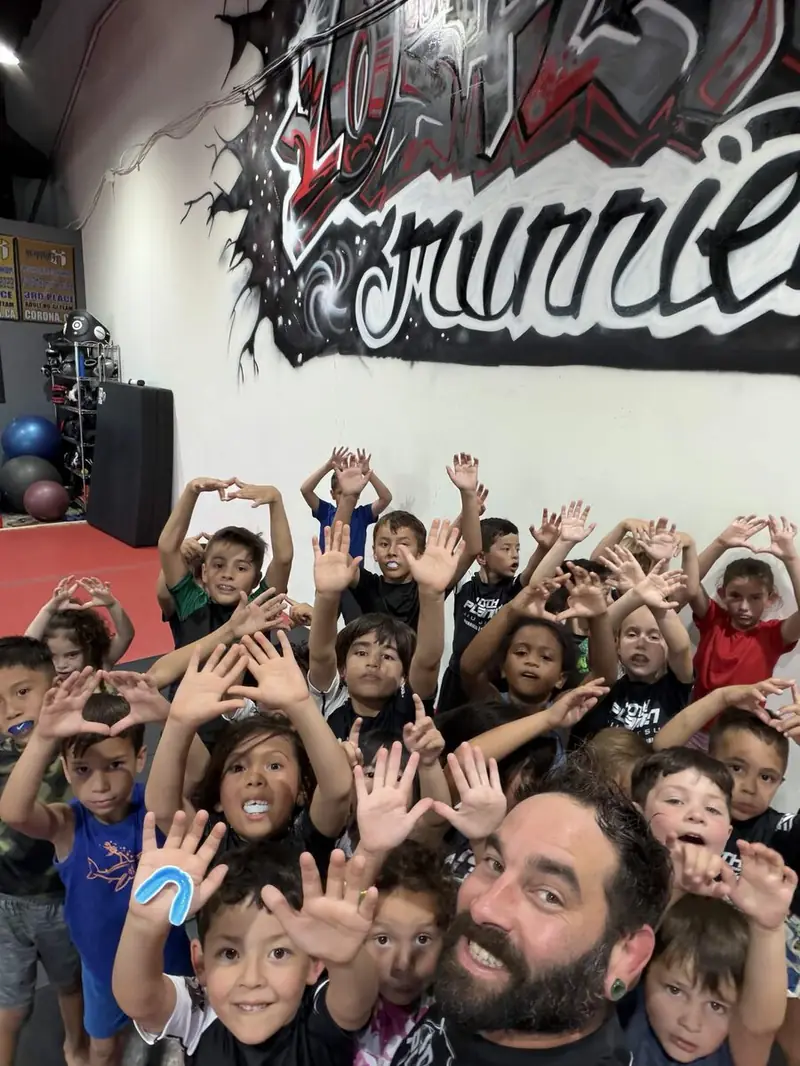
10th Planet Jiu Jitsu Murrieta runs dedicated youth programs for toddlers through teens, serving families throughout Murrieta, Temecula, Wildomar, and Menifee. If your child is dealing with a difficult situation at school, we'd encourage you to bring them in for a free trial and see how they respond to the environment firsthand.